Event JSON
{
"id": "039682017d7c676d594d6f24bd5b38aa7d20c96ff47b234beebe3883fdaf283d",
"pubkey": "40b1d9748661a347a3e62d7d066abf0dcb41def877442b997e01ee8ab38386f6",
"created_at": 1743958267,
"kind": 1,
"tags": [
[
"proxy",
"https://ohai.social/@archaeohistories/114292049015383069",
"web"
],
[
"t",
"archaeohistories"
],
[
"imeta",
"url https://files.ohai.social/media_attachments/files/114/292/048/720/922/183/original/7967a85cfe9363cb.jpg",
"m image/jpeg"
],
[
"proxy",
"https://ohai.social/users/archaeohistories/statuses/114292049015383069",
"activitypub"
],
[
"L",
"pink.momostr"
],
[
"l",
"pink.momostr.activitypub:https://ohai.social/users/archaeohistories/statuses/114292049015383069",
"pink.momostr"
],
[
"-"
]
],
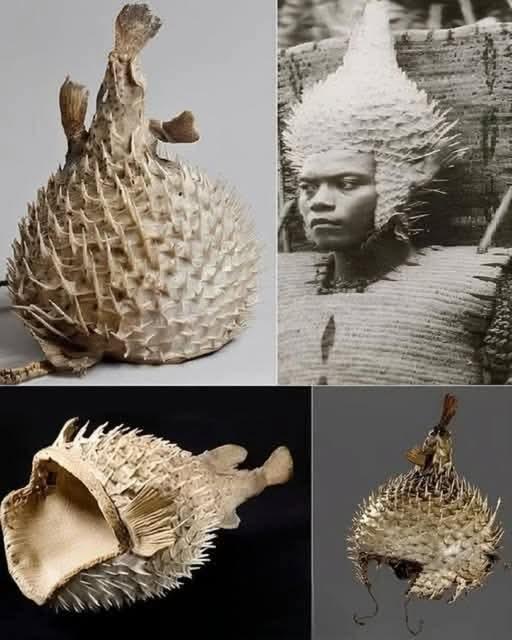
"content": "In 19th Century, the warriors of Kiribati donned an extraordinary piece of headgear known as te barantauti—helmets fashioned from the dried skins of porcupinefish. \n\nThese unique puffer fish, adorned with their formidable spikes, transformed into natural armor, imbuing the helmets with both protection and a striking presence.\n\n#archaeohistories\nhttps://files.ohai.social/media_attachments/files/114/292/048/720/922/183/original/7967a85cfe9363cb.jpg\n",
"sig": "f40e5077e65af3d9782deaefb238d7f748c61adeb4fdd074db8c6eb02be48270dd94f4b01c674fd947180be66aa47ee9e44fcb2d9f161e0ff6d00aac9dbaf2bb"
}