Number 29 (in quote tweet)
Numbers 1-28: https://pkteerium.xyz/@cjd/posts/BBYLP8nKnlOZvnK8Bc
Today, the product that doesn't exist, but should.
So, you're living off-grid, maybe you're too far from the grid, maybe electricity is too expensive, maybe the power hookup is too far from where you want your house, or maybe you just do not want to associate with the electric company.
30 years ago if you wanted this - and you didn't happen to have a water source for hydroelectric generation - you needed to be okay with burning candles, bucketing your water, and getting your entertainment from a portable battery powered radio. But thanks to advances in solar and battery technology, living a normal life off-grid has become surprisingly realistic.
If you have deployed solar panels, you can generate a lot of power all through the summer months. Large batteries (the likes of which are used in EVs) are available at fairly reasonable prices, and will carry you though one or two days without sun. Solar panels are SO CHEAP that you can massively over-provision such that even with a string of cloudy days, you still generate enough power to keep your batteries charged.
However, the winter months present a unique challenge. Depending on your local climate, you generally expect short days, cold, and lots of cloudy, snowy weather where solar panels generate ~nothing.
Your solar does (massively) over-produce in the sunny days of summer, and storing up that energy for winter is the topic of NUMEROUS posts (see above). But the reality is that long term energy storage remains a very difficult problem.
But if we step away from storage for a moment, there is another technology that is mature, reliable, and fits the resources available to the average homesteader. That technology is wood gas.
But while the technology is mature, the product that should exist still doesn't, and that product is an outdoor firewood boiler which can also make power with a gas engine generator.
There are three technologies for wood burning: they are firewood, wood pellets, and wood chips. Small wood burning applications tend to use wood pellets because they are standardized and easily screw-fed, allowing for small, machine-managed fires. Very large applications tend to use wood chips which can be stored in silos, fed with screw and conveyer, and achieve continuous operation with minimal human intervention. Homestead scale applications tend toward stacked firewood. Stacked firewood is kind of crap, the manual labor involved in production, transport, and burning is huge, but it is a standard. The machinery to produce cut, split firewood is mature and widely deployed, and at the scale there most homesteaders buy wood, firewood is simply the most cost-effective option.
Less than 1 tonne favors wood pellets, more than 100 tonnes warrants semi-truck delivery and favors chips, and the awkward middle is where locally sourced firewood wins.
Firewood based gasification boilers already exist, they produce wood gas from firewood and then burn the gas immediately afterwords to produce an efficient smokeless fire. These are currently the standard in outdoor wood boilers.
Wood chip gasification units also exist, alibaba is teaming with examples like [attached video]. But these machines require wood chips, they produce more energy (and consume more chips) than the average homesteader would want, and it's unlikely that they are capable of standby mode which makes outdoor wood boilers reasonably low maintenance.
But the gap between a modern gasifying wood boiler and a wood boiler with woodgas capability is surprisingly small. The main differentiator is that a gasifying wood boiler introduces enough secondary air to burn away all of the wood gas immediately, while a woodgas generator introduces enough air to keep the temperature hot so that tars are cracked, but not burn away all of the energy from the gas. Furthermore, modern woodgas generators introduces some steam in the secondary air stream because the hot carbonous gas will steal oxygen from the water, leaving hydrogen which is a more ideal fuel for an engine.
The product that should exist is essentially a wood boiler, except with an integrated electric generator. Instead of the classical firebox -> secondary burner -> water heat exchanger -> exhaust, the design is: firebox -> secondary burner -> air heat exchanger (so air into the firebox is hot) -> water heat exchanger (so gas is cool) -> tertiary burner -> water heat exchanger (extract heat) -> exhaust.
At just before the tertiary burner, there's an automatic bypass valve that can take the gas to an internal combustion engine (generator). When heat is required (or if the generator is not connected or out of service), the system makes wood gas as though it was going to run the generator, but it burns it off in the tertiary burner, making heat. When electricity is required, the system starts up as though it were making heat, but once the quality of the gas at the tertiary burner is good enough (some sensor is reading this), the tertiary burner is shut down and the valve to the engine is opened up, then it starts the engine.
There are a few adjustments that need to be made continuously, and a number of failure modes, but this is what computers are good at. Modern outdoor wood boilers are already computerized to a surprising extent, so adding the ability to make electricity is well worth the few extra sensors, servos, and potential error codes. And in case of a failure which makes the generator non-operational, a well designed system can fall back to making heat only.
https://pkteerium.xyz/media/687a09889d28711aef43093716d2c6039f2d8a878c19e5f5becd6be0ca3616f8.mkv
29 Sunday energy post
Hydrogen is fools gold, there I said it.
I like hydrogen because it's easy to make, it packs up a lot of energy, and you can burn it in an engine or a fuel cell. But the "hydrogen economy" of the future doesn't look like it will ever arrive.
Hydrogen has three major problems, and if any one of these three problems wasn't a problem then it would have a real fighting chance, but with all three of them it looks like it will be hopeless.
Problem number one: Hydrogen fuel cells are only about 50% efficient. This is great compared to fuel engines, but it's awful compared to batteries which hit up to 90%.
Problem number two: Hydrogen is extremely fussy to store. You can compress it but it doesn't save much space, you can cryogenically cool it but it requires an obscene amount of cooling, you can tie it up in a chemical like ammonia, but this is another difficult process and ammonia isn't *trivial* to store either.
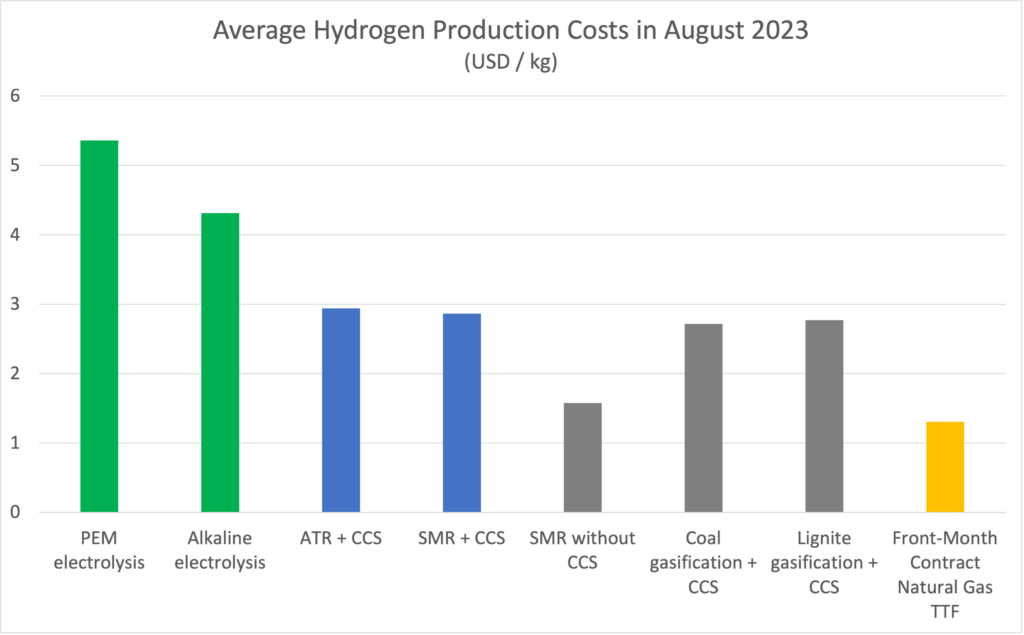
Problem number three: It is extremely unlikely that hydrogen will ever be cheaper (per unit energy) than wholesale natural gas.
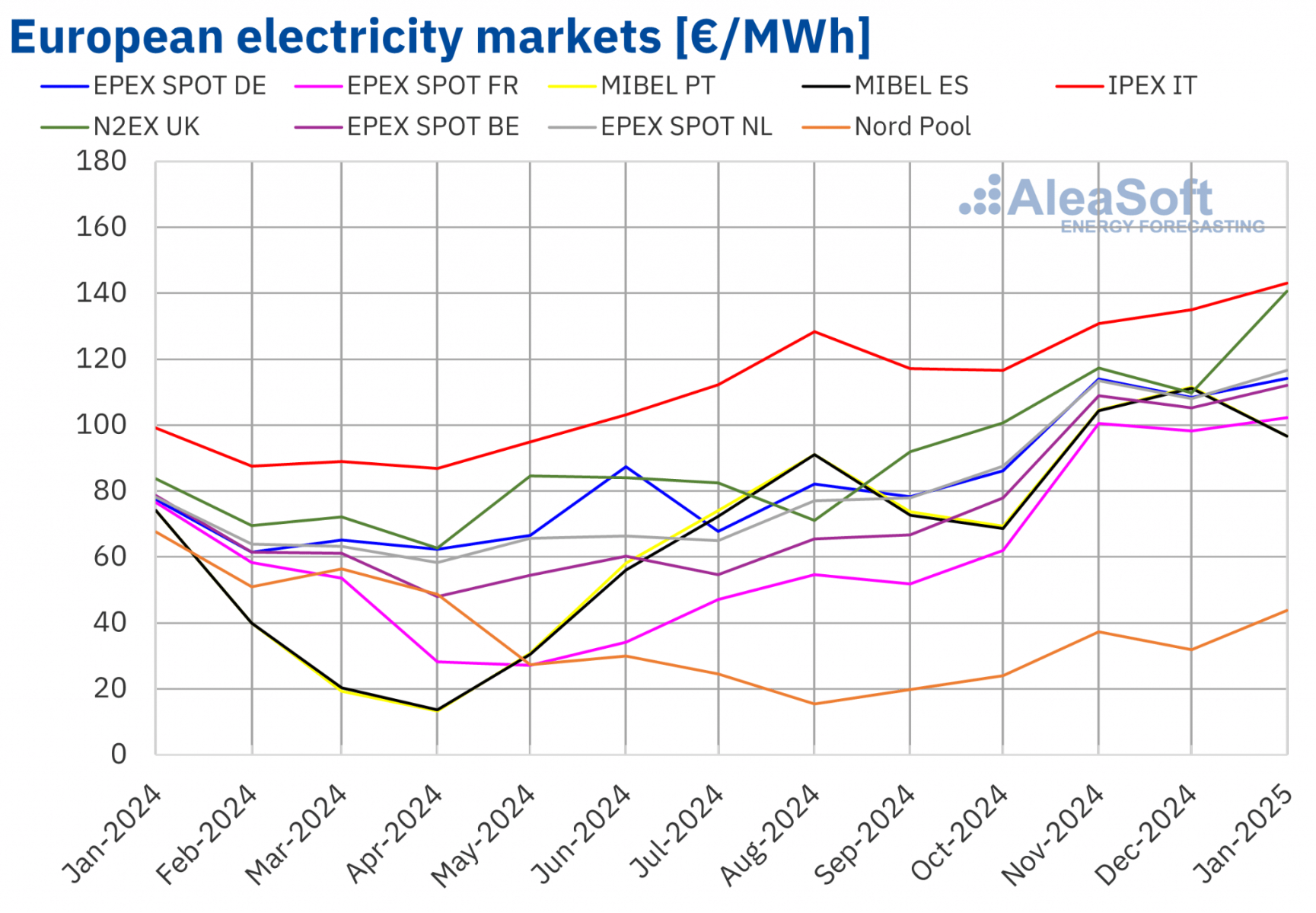
Number three is brutal because at current, the cheapest way to make hydrogen is *using* natural gas as the feed stock. And that just destroys any hope of hydrogen becoming a serious energy commodity because the response is always "dude just use natural gas". For electrolytic hydrogen to become competitive with natural gas, electricity needs to fall well into the $20/MWh range and it's just not heading there in any country right now.
If hydrogen from electrolysis would at least be reliably cheaper than that from natural gas reforming, then we could imagine some little hydrogen micro-economy between production, storage in salt caverns (essentially gas wells), and industrial consumption. But until at least that happens, industrial consumers will just use gas to make their hydrogen.
But even with problem 3, if hydrogen was this ideal analogue to gasoline or diesel which you could just pour into a tank, then it would still have an application because it can be made with excess electricity generation in any given solar installation, and it can be poured in the tank of a car. Unfortunately it is no such thing, and storage is a real challenge.
But lets say storage is hard, and generation doesn't beat natural gas, if it was at least efficient to convert into electricity then it could provide a very compelling grid scale battery. If you can generate hydrogen, send it down a disused gas well, and get it back to electricity all inside of 60+% round trip efficiency, this is compelling. Power companies pay for this type of thing, and the amount of hydrogen you can store up in a gas well is quite enormous.
However, the limitation of fuel cell efficiency makes even this application quite uninteresting compared to flow batteries, pumped storage projects, and even just plain old lithium batteries. A pumped hydro storage project can hope for 80% efficiency, even a really good optimized fuel cell running in it's peak efficiency range can only reach about 70% - with most fuel cells under 50%. And that's just the consumption side, the production side is another face of the same problem and the inefficiencies are additive.
So while hydrogen may have some applications in an off-grid homestead, it's pretty unlikely that The Hydrogen Economy will ever develop into anything, so the technology is kind of doomed to remain an interesting niche. And this applies equally to ammonia which will probably never get out from under the shadow of diesel fuel.