Event JSON
{
"id": "07c2f021a748a267760c35addc266099e99413b2d8033d4195f94a011f644150",
"pubkey": "3311217a09447f928e995a0cf5318e5adc0b6b77dc43ba13ede754e425f717b9",
"created_at": 1759115656,
"kind": 1,
"tags": [
[
"imeta",
"url https://files.mastodon.social/media_attachments/files/115/285/395/528/681/936/original/0b560a50a9519ee8.png",
"m image/png"
],
[
"proxy",
"https://mastodon.social/@tubetime/115285403680744481",
"web"
],
[
"proxy",
"https://mastodon.social/users/tubetime/statuses/115285403680744481",
"activitypub"
],
[
"L",
"pink.momostr"
],
[
"l",
"pink.momostr.activitypub:https://mastodon.social/users/tubetime/statuses/115285403680744481",
"pink.momostr"
],
[
"-"
]
],
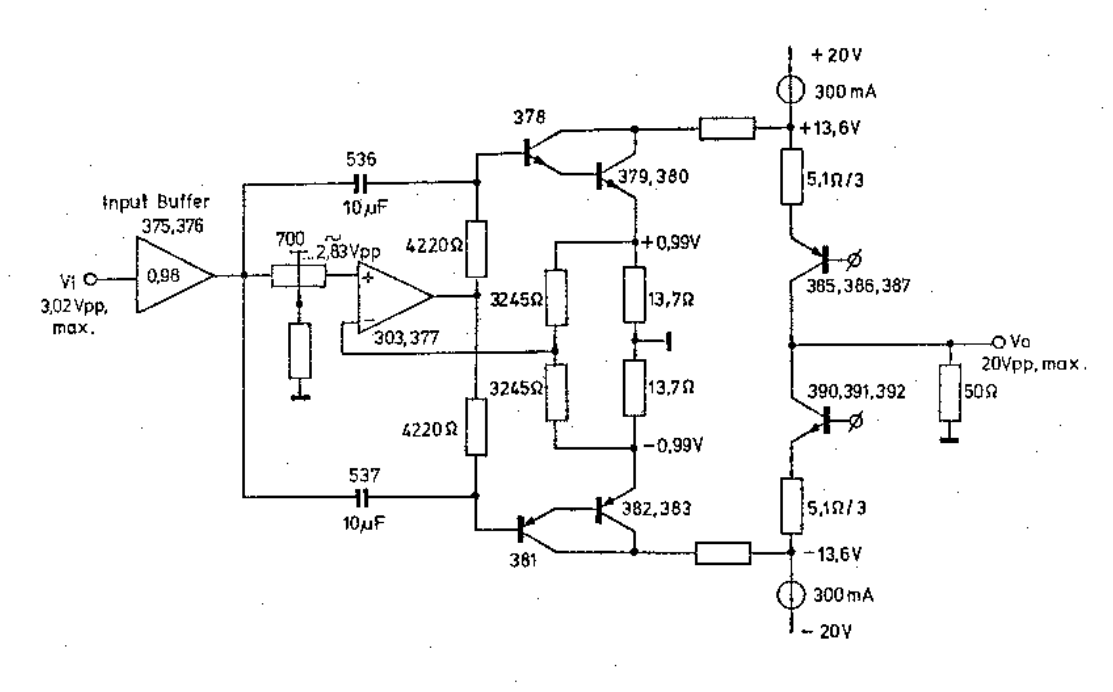
"content": "this is the amplifier simplified diagram, from the service manual\n\n...the POWER AMPLIFIER is a complementary collector-output type. At frequencies aboe some hundred Hz the ac input voltage is passed through the input buffer and C536, C537 directly to the base of transistors 378 and 381, converted to ac currents by 378...383 and fed through 385, 386, 387 and 390, 391, 392 respectively to the internal 50 ohm output resistor, made up by the resistors 781...786.\nhttps://files.mastodon.social/media_attachments/files/115/285/395/528/681/936/original/0b560a50a9519ee8.png\n",
"sig": "875fb88de5fe8280abc56d946f7eff5252264b045c1ea13004ceb8ed6f326e15561b8d91c5af8b659af82e7084e789283b553c334c370258e66242149b6bd10b"
}