- Previous "voter registration" with a "party affiliation". Essentially the government already knows who's gonna vote for whom! It's just a matter of time till these lists will be used for retaliatory purposes. Basically the secrecy of the vote is almost entirely undermined by this.
- Multiple layers of "winner takes all", so only few districts actually matter.
Together this is an ideal ground for manipulation - after all, the government already knows where to manipulate to get the desired outcome!
In that sense, I find it actually quite problematic that voting machines supposedly know the voter's registration. Ideally the voting machine shouldn't even know the voter's identity - the poll workers should check that, guide the voter to the booth, and then push a button that simply makes the machine accept _one_ ballot. If we want to rely on poll workers less, we can instead give voters after ID verification a single-use code to scan at the machine, which however has to be generated without taking voter registration or any other personal data into account (imagine a stack of those things in the office where you register).
E.g. if a machine makes it easier and faster to vote according to your registration, and if poll workers have party affiliation in their lists, then the poll workers can immediately see who voted matching their affiliation - namely, all the fast voters did. This too is a secrecy-of-the-vote issue.
More interesting manipulation can be more subtle. What if e.g. the user interface of the machines is sluggish or weird for one candidate, but works well for the other - if nothing else, can this bias the next election? What is the bias of long lines before the voting booth on the outcome? If e.g. one party is more "determined" and willing to wait in line for hours, simply slowing down the machines generally will favor that party.
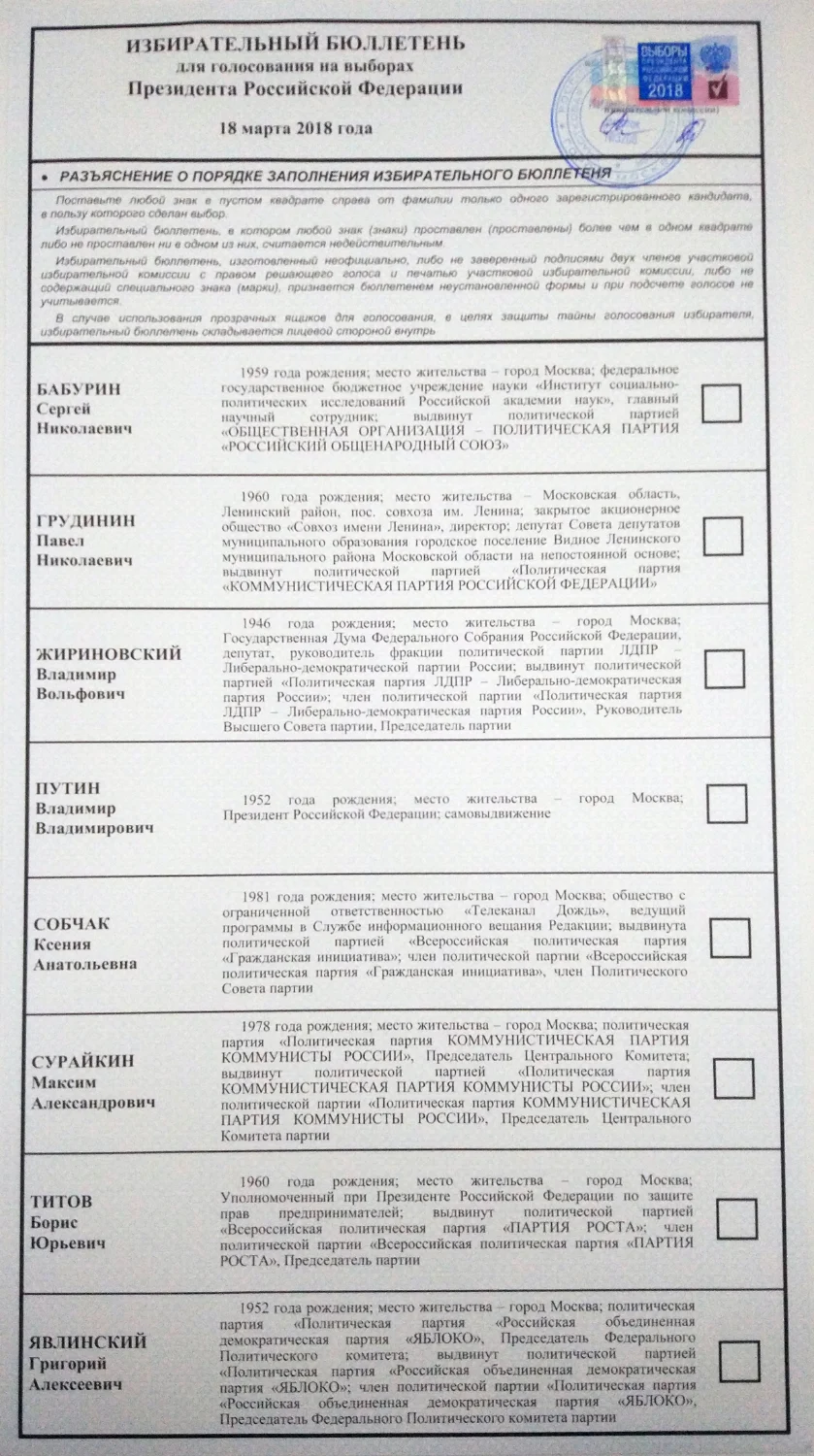
And all this is way outside the mathematical-scientific aspects. One of my favorite instances of vote manipulation is actually a paper ballot; see attached image. One option doesn't look like the others - and "incidentally" got most votes. Eye catching works. It's really easy to bias the human mind. And I bet this was all fully legal by actually well intentioned voting laws (not saying the entire system there is well intentioned, but this kinda attack might work in other places too).