APOD on Nostr: **Astronomy Picture of the Day** 24 August 2026 **Comet 220P in Outburst** Image: ...
**Astronomy Picture of the Day**
24 August 2026
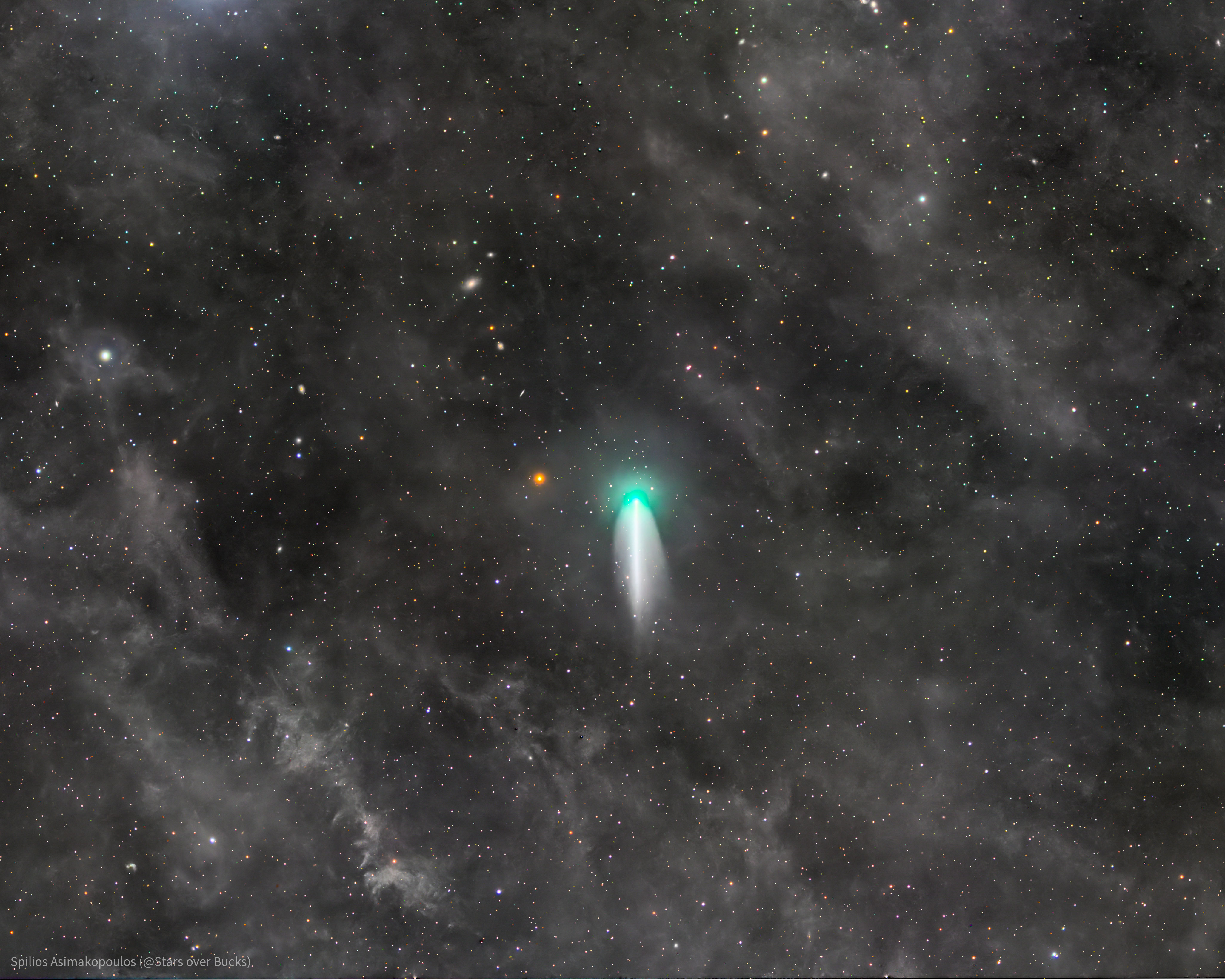
**Comet 220P in Outburst**
Image:
Credit: Not provided
Comet 220P is unexpectedly bright. Normally, periodic Comet 220P/McNaught is so dim that to see it requires a telescope. Two surprising outbursts this year, however, have made it about 20,000 times brighter than usual, so that it is now visible with binoculars and long-duration camera exposures . As expected, Comet 220P continues to orbit the Sun between Mars and Jupiter with a period of over 5 years. The featured long duration exposure , taken 10 days ago from South Africa , shows the comet 's bright green head and short dust tail . Reasons for Comet 220P's impressive outbursts are unknown but could be caused by the release of built-up subsurface gas or comet quakes . Comet 220P will pass about one Earth-Sun distance from the Earth in October, after which it is expected to fade quickly as it begins its return to the far part of its orbit.
#APOD #NASA #lookUp #Astronomy #NASAInspires
https://apod.nasa.gov/apod/ap260824.htmlPublished at
2026-08-24 04:06:08 UTCEvent JSON
{
"id": "810e287673d6fdf91bce61507ef04eeb12542ca104d4bf0531e9b9d88f686607",
"pubkey": "e85ed75286cb77475776c1007df8c4ff1c9c68eff91c3627347b065c5bf4dc78",
"created_at": 1787544368,
"kind": 1,
"tags": [],
"content": "**Astronomy Picture of the Day**\n\n24 August 2026\n\n**Comet 220P in Outburst**\n\nImage: https://apod.nasa.gov/apod/image/2608/Comet220P_SA_4104.jpg\n\nCredit: Not provided\n\nComet 220P is unexpectedly bright. Normally, periodic Comet 220P/McNaught is so dim that to see it requires a telescope. Two surprising outbursts this year, however, have made it about 20,000 times brighter than usual, so that it is now visible with binoculars and long-duration camera exposures . As expected, Comet 220P continues to orbit the Sun between Mars and Jupiter with a period of over 5 years. The featured long duration exposure , taken 10 days ago from South Africa , shows the comet 's bright green head and short dust tail . Reasons for Comet 220P's impressive outbursts are unknown but could be caused by the release of built-up subsurface gas or comet quakes . Comet 220P will pass about one Earth-Sun distance from the Earth in October, after which it is expected to fade quickly as it begins its return to the far part of its orbit.\n\n#APOD #NASA #lookUp #Astronomy #NASAInspires\n\nhttps://apod.nasa.gov/apod/ap260824.html\n",
"sig": "48b8aaa8f93a2274afbd71a35974c49dbfe385d8f13cb7aeff8b20d6af30600c81bacee472c5f2cc155529dd6ab89f0e01796a6c29cef7c2ee765974cbead84b"
}
