Event JSON
{
"id": "953782a155a8d989cdd9167bb482165d9370e5c866cad84abad0fd67bef0de4e",
"pubkey": "f06c0d239b29f2884d1a345bd1e120125610976d968e6002bb324116b70fc39e",
"created_at": 1741715284,
"kind": 1,
"tags": [
[
"imeta",
"url https://m.universetoday.com/system/media_attachments/files/114/145/052/862/332/628/original/ed89527ba37ccf65.jpg",
"m image/jpeg"
],
[
"proxy",
"https://m.universetoday.com/@fraser/114145052873096522",
"web"
],
[
"proxy",
"https://m.universetoday.com/users/fraser/statuses/114145052873096522",
"activitypub"
],
[
"L",
"pink.momostr"
],
[
"l",
"pink.momostr.activitypub:https://m.universetoday.com/users/fraser/statuses/114145052873096522",
"pink.momostr"
],
[
"-"
]
],
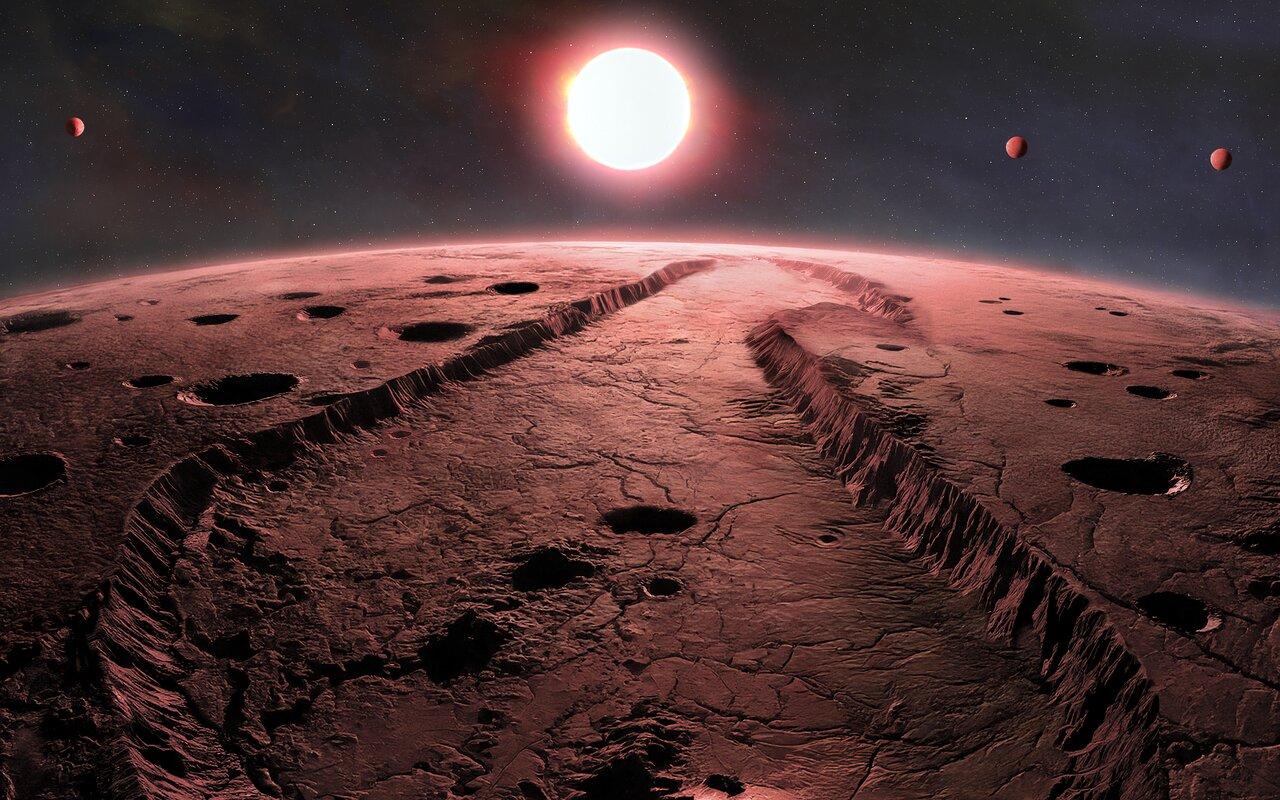
"content": "Barnard's Star is the closest single star to Earth, located just 6 light-years from Earth. Astronomers announced today that they've found four new mini-Earth planets in orbit around the red dwarf star. The planets were found with the MAROON-X instrument installed on the Gemini North telescope, which uses the radial velocity method to detect subtle shifts in starlight from the gravity of the planets. One planet was found in August 2024, and three more were added today.\n\nhttps://noirlab.edu/public/news/noirlab2510/\nhttps://m.universetoday.com/system/media_attachments/files/114/145/052/862/332/628/original/ed89527ba37ccf65.jpg\n",
"sig": "9e57b06d05329d59f4c65aea52ec2df7345a95612008137fe76feb0e81d652db743c4a0faf89156b3fb315016d3dc7eb3d238b72a93b4ef0e28dc0d1b8ff30d8"
}