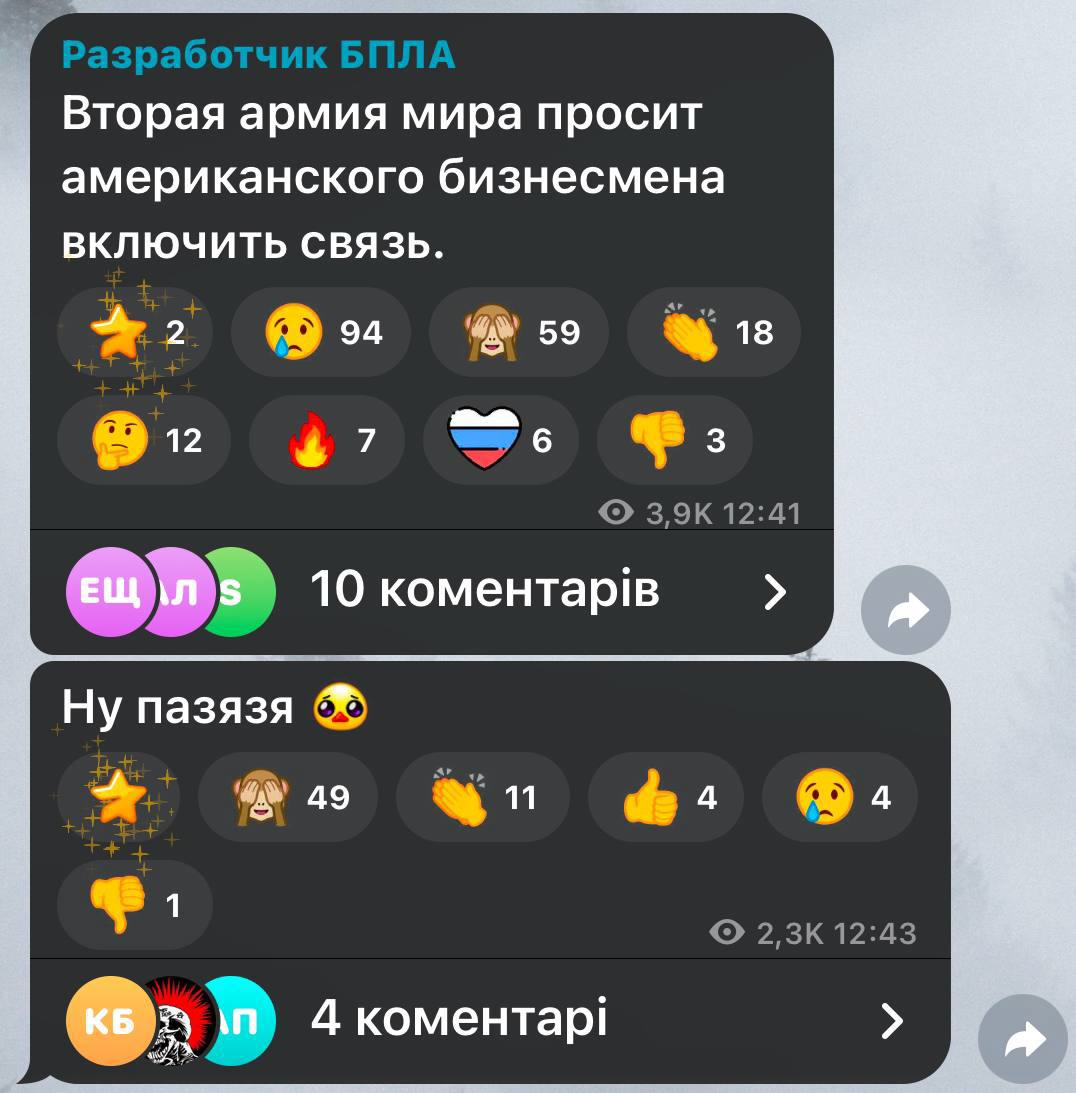
As a reminder “Second Army of the World” was a popular self-denomination that Russia routinely boasted about before 2022. After, they somehow stopped using it 😉
#Playfra OSINT channel meanwhile posted some updates on the observed activity of Russian assaults:
After unregistered users were cut off from using the terminal, Russian attack intensity suddenly and sharply dropped, at least in the Ternuvate and Borova directions, and likely dropped in many other areas too, which I’m currently clarifying.
Kostyantynivka - yes. Russian attacks generally slowed down. The biggest difference is noticeable with attacks coming from the Chasiv Yar side, but a slowing down is also noticed in the other parts of the direction.
An #Ukraine military engineer posted his account on front-line comms before and after Starlink - this applies to both sides equally, except Russians no longer have Starlink:
Once, they laid 3 kilometers of field cable for us across the field to ensure communication between the gun and the drone; one such time, the guy pulling the field cable arrived only after the shooting had ended (we’d adjusted by coordinates, no time to wait), and he told us that the field he’d been dragging it through was a bit mined.
In the conditions of modern warfare, laying wired communication and maintaining it in proper condition in frontline zones is extremely difficult, even when there’s no shelling—cables get gnawed by mice, worn through by wind, torn up by wild boars, twists oxidize, and so on.
So the alternative is Wi-Fi networks, but they’re limited too: building a bridge requires radio horizon, where it’s absent, you need to set up intermediate nodes, each node needs power and maintenance.
On top of that, the bandwidth of such a network isn’t all that high, and it drops with each node, plus if the main line breaks, the whole branch goes down, and an entire section of the front might be left without comms.
In the era of Starlinks, these networks were built for redundancy, but they themselves had to be backed up via Starlink or by connecting to local providers’ communication networks.
It works, but it’s heavily limited, and laying a dozen streams over such a network to HQ is quite challenging. That’s why Starlink gives such an advantage.
Russian channel, quoted by Playfra:
“After the blocking of Starlink, our soldiers on the frontline urgently need our help to launch attacks and repel enemy attacks. Due to the blocking of Starlink terminals, the command and control of troops has become difficult on almost all fronts. Soldiers are writing to us and asking for help with equipment - radio bridges and radio stations.”