Event JSON
{
"id": "538f9686b2d14271422bb12bb3904a81e8154bea855beeef947a33d251d551fc",
"pubkey": "fc12781e6898c7b2ebce36fd9c9ed38021bbc43abd90dab7083e6ab7d4aafb5a",
"created_at": 1762974007,
"kind": 1,
"tags": [
[
"proxy",
"https://mastodon.social/@esoastronomy/115538264574036956",
"web"
],
[
"imeta",
"url https://files.mastodon.social/media_attachments/files/115/537/561/378/164/508/original/f99ce32a00b92c76.png",
"m image/png"
],
[
"t",
"astrodon"
],
[
"t",
"science"
],
[
"t",
"space"
],
[
"t",
"astrophysics"
],
[
"t",
"astronomy"
],
[
"proxy",
"https://mastodon.social/users/esoastronomy/statuses/115538264574036956",
"activitypub"
],
[
"L",
"pink.momostr"
],
[
"l",
"pink.momostr.activitypub:https://mastodon.social/users/esoastronomy/statuses/115538264574036956",
"pink.momostr"
],
[
"-"
]
],
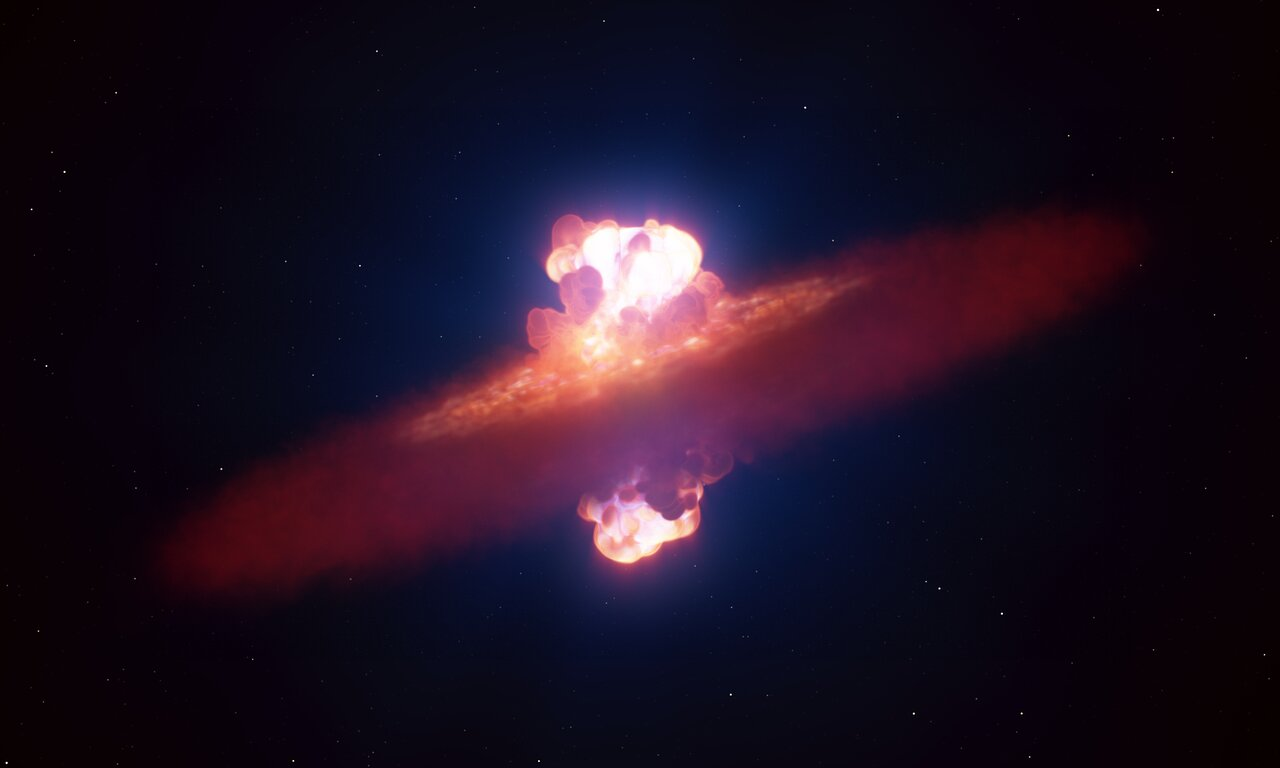
"content": "For the first time ever, astronomers have unveiled the shape of a star’s explosion at its earliest stage.\n\nThe feat was achieved by ESO's Very Large Telescope just a day after the detection of this supernova, as the blast was breaking through the star’s surface.\n\nThis brief initial phase wouldn’t have been observable a day later. This will help shed light on how massive stars go supernova.\n\nhttps://www.eso.org/public/news/eso2520/\n\nIllustration: ESO/L. Calçada\n\n#astrodon #astronomy #astrophysics #space #science\nhttps://files.mastodon.social/media_attachments/files/115/537/561/378/164/508/original/f99ce32a00b92c76.png\n",
"sig": "d94516fd4206353181af408f0c18be9ea291ad7a1408ccfcbfc70d727e92c8b1f57807040fc56610d02f6335325982d7ebfeb2dbe27ddd2e3d8f98bf344a0fce"
}