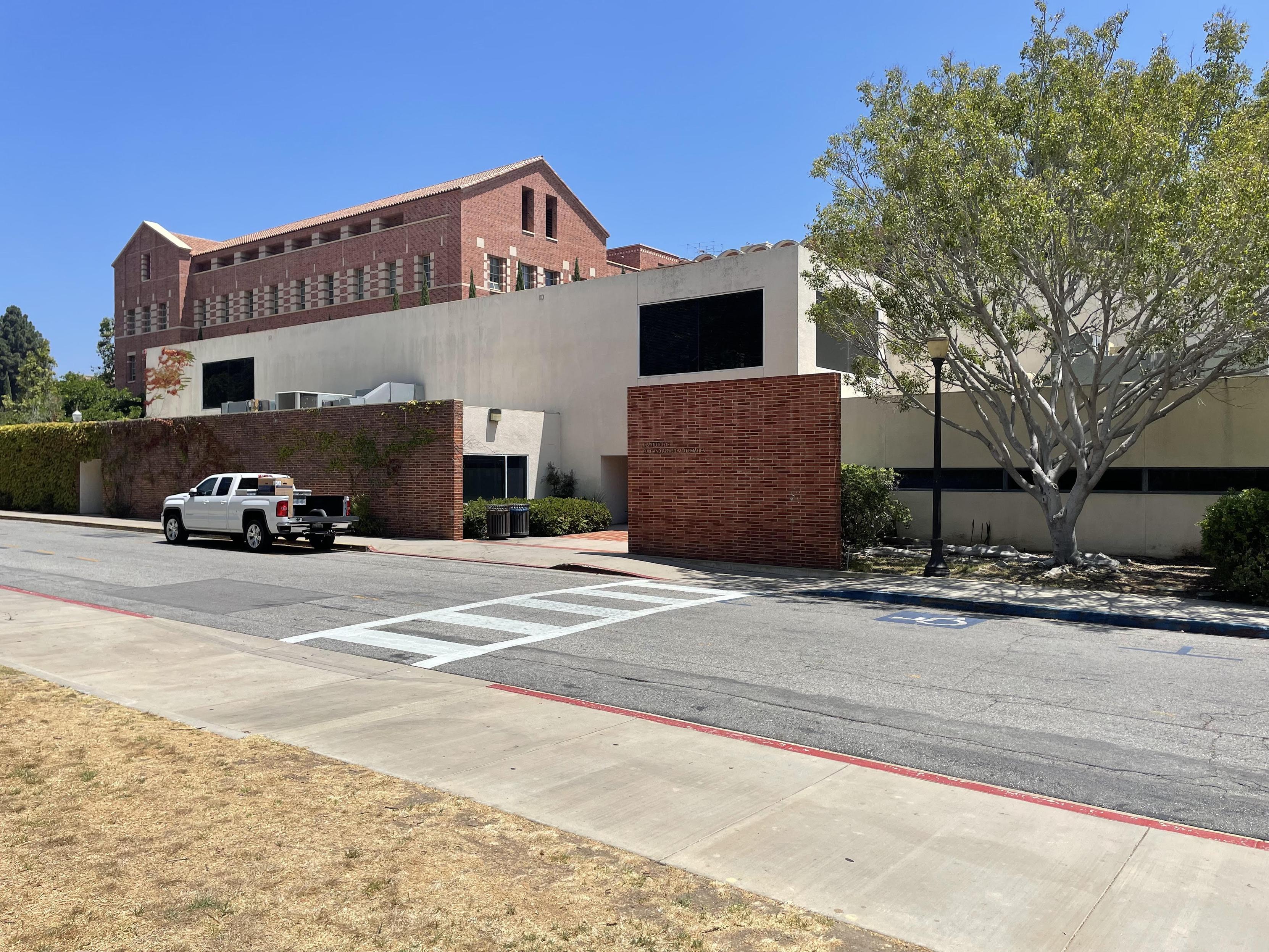
One well-known example that I was involved many years ago was the 2004 program https://www.ipam.ucla.edu/programs/long-programs/multiscale-geometry-and-analysis-in-high-dimensions/ on Multiscale geometry and analysis in high dimensions, where the organizers had identified the potential for bringing together pure mathematicians whose work involved geometry at multiple scales with scientists interested in such applied topics as signal processing or the accurate modeling of materials. I participated extensively in this program, and in particular interacted quite a bit with one of the organizers (Emmanuel Candes) as well as Justin Romberg, leading to several foundational papers in the field now known as "compressed sensing", which permits (in certain circumstances) the rapid acquisition of high-resolution images or other information from a relatively small number of measurements. (Perhaps the most well known applications of the compressed sensing algorithms that came out of the work of Emmanuel, myself, Justin, David Donoho, and others was the ability to speed up the time required for a medical-grade MRI scan by up to an order of magnitude.) (2/4)