
This is a real example of publishing a Nostr note using Continuum running locally — no client required.
Below are 5 screens showing the full flow — from writing a note locally to seeing it appear in another Nostr client.
NOTE: On some mobile clients, images may appear at the end — they are labeled to match each step.
Screen 1 — Continuum dashboard (running locally)
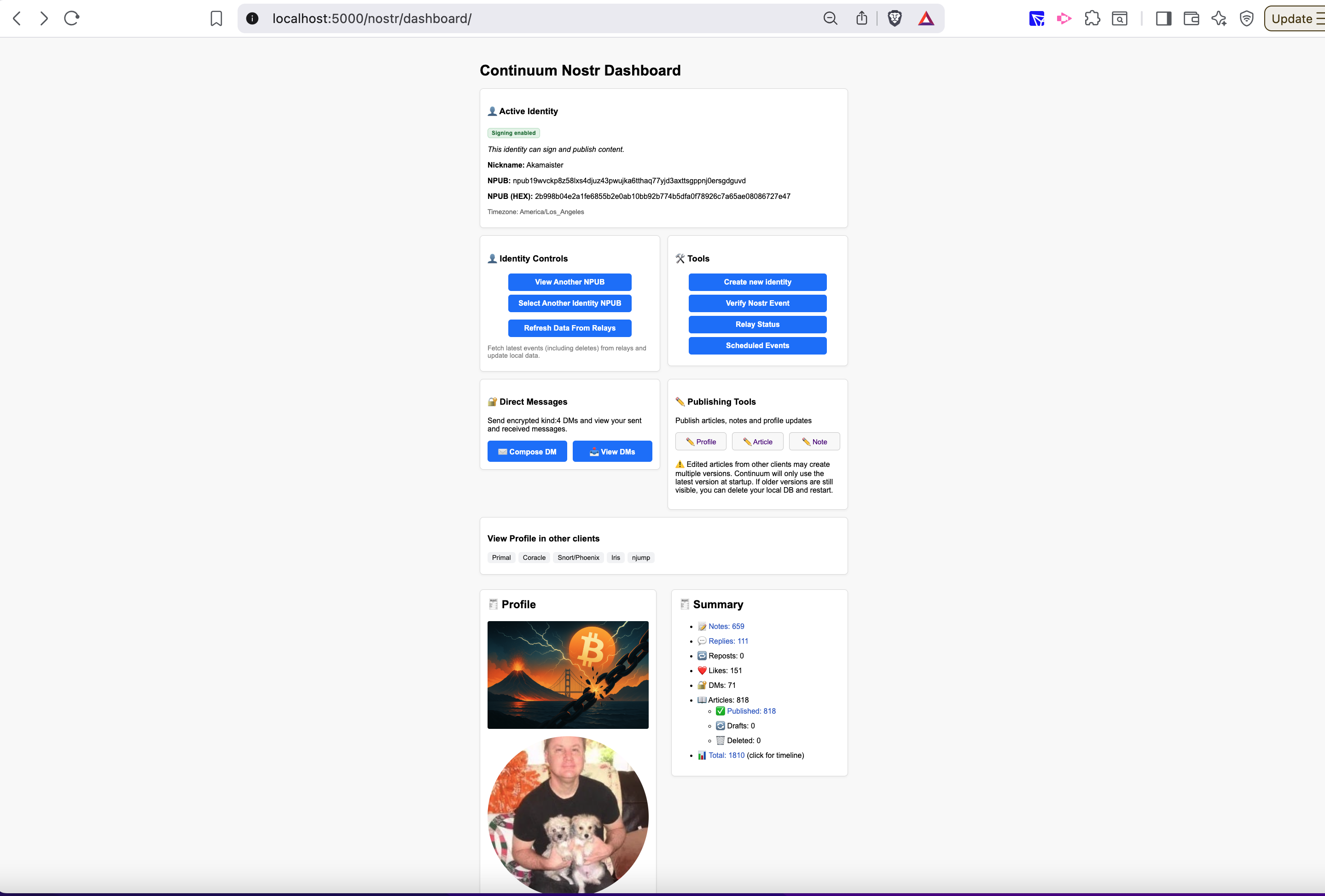
This is the Continuum dashboard running at localhost.
It shows:
- my notes and articles stored locally
- my active identity
- publishing tools
- NOTHING here is hosted
- NOTHING here is seen through any client or app
- NOTHING depends on a platform
If you're using a client today, your content typically starts there.
--> Here, it starts locally. <--
Screen 2 — Managing identities (npubs)
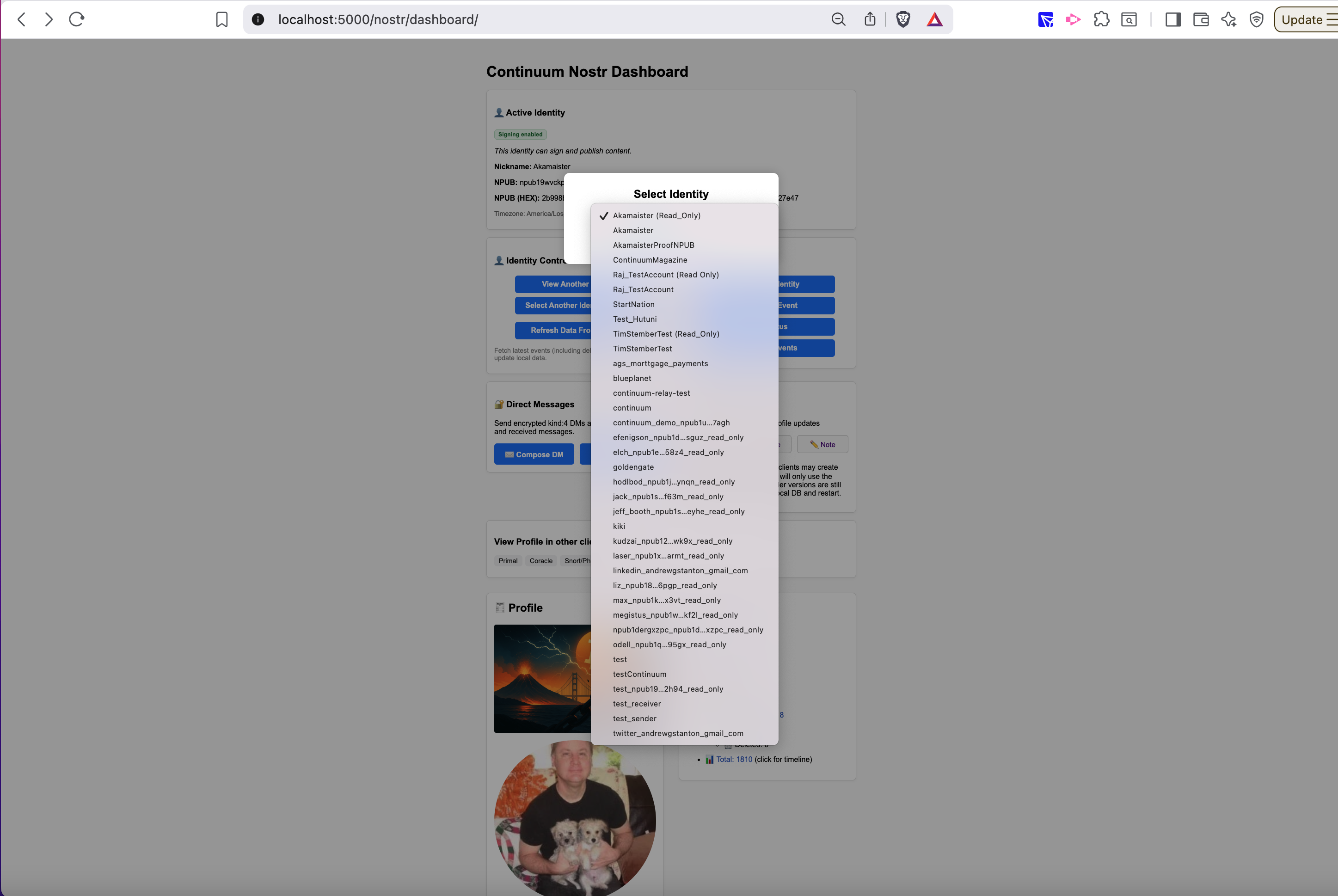
Here I am selecting from multiple identities.
These are Nostr keys, not accounts.
- no email
- no password
- no platform login
Each identity can sign and publish independently.
Most systems assign identity.
--> Here, it’s controlled directly. <--
Screen 3 — Writing a note (local authoring)
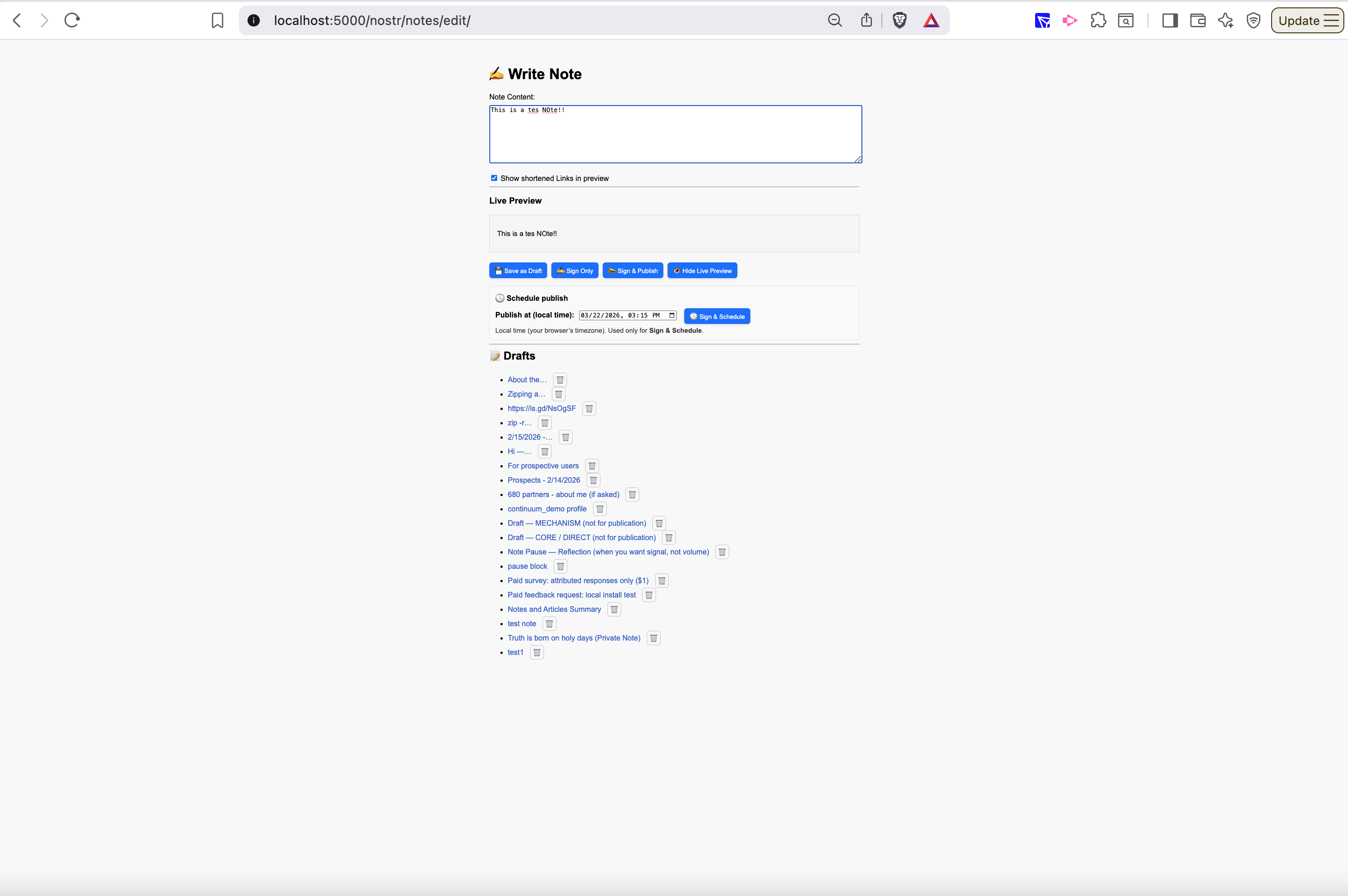
This is the note being written inside Continuum.
It is created locally:
- not inside a Nostr client
- not through a browser extension
Just direct authorship on my machine.
--> Question: If your current tool disappeared, where would your drafts live? <--
Screen 4 — Note after signing and publishing (local view)
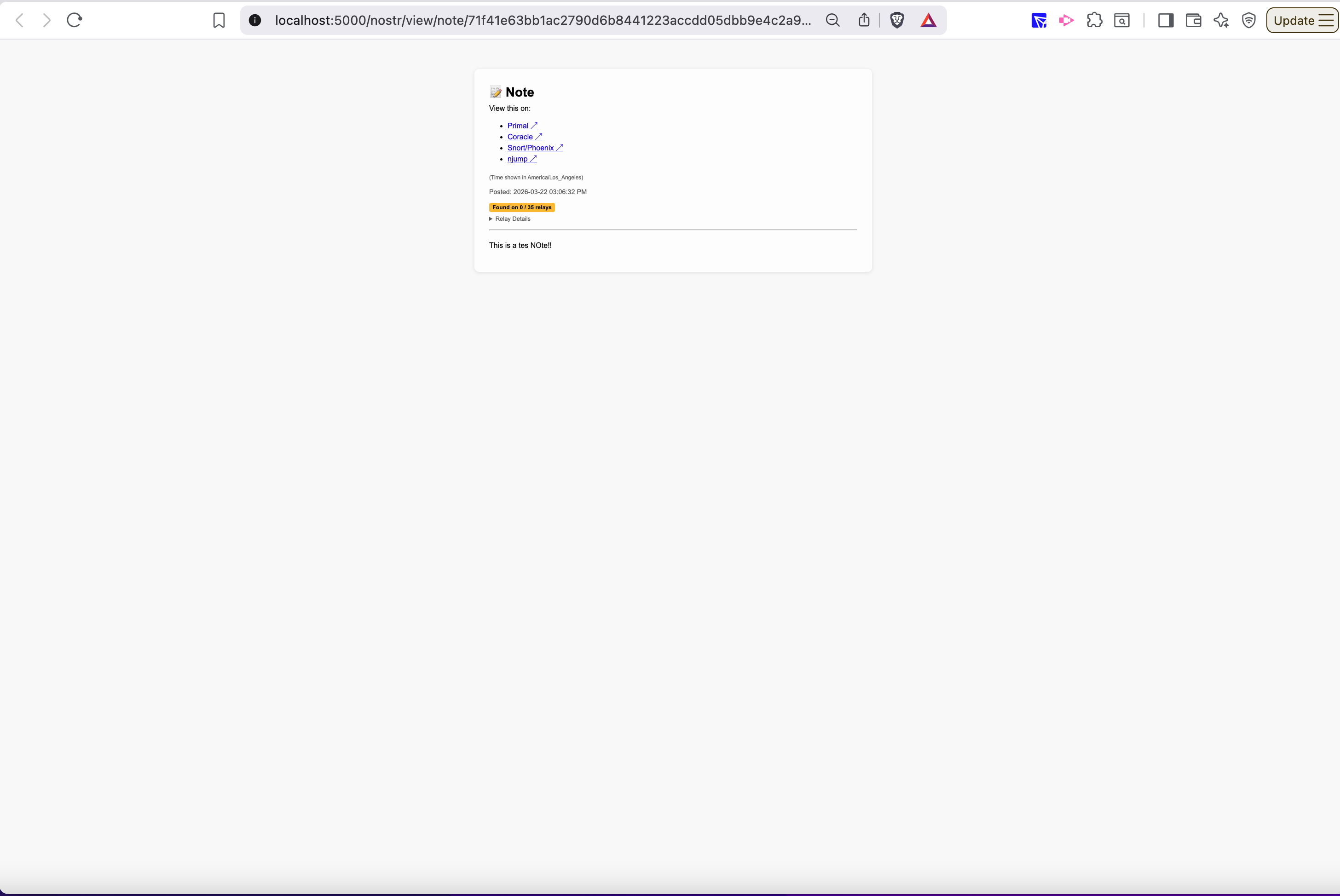
After clicking “Sign & Publish”:
- the note is signed with my key
- sent to relays
- stored locally as a signed event
This confirms the note has been created and published.
Screen 5 — Same note visible in Coracle (external client)
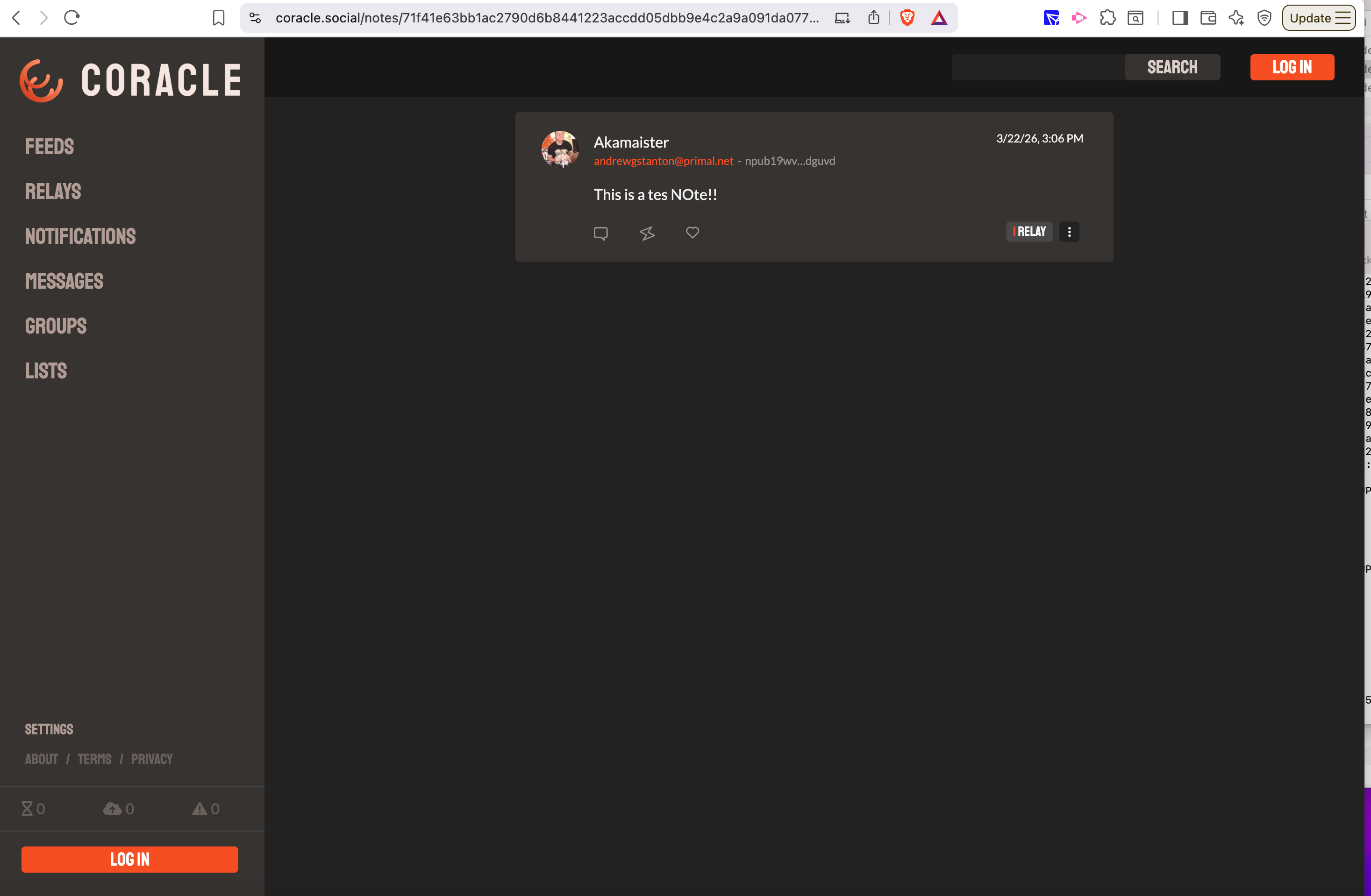
Here is the exact same note in Coracle.
This shows:
- the note was published to the network
- any client can display it
It was not copied or synced through a service.
The client didn’t create this note.
It only displays it.
What this example shows
→ write locally
→ sign with your key
→ publish directly
→ view in any client
Key takeaway
Continuum is the source of authorship.
Clients are just viewers.
Most tools optimize for convenience.
They also introduce dependencies you don’t notice until they matter.
This setup requires running Continuum locally (Docker, etc.).
That’s the tradeoff for full control and ownership.